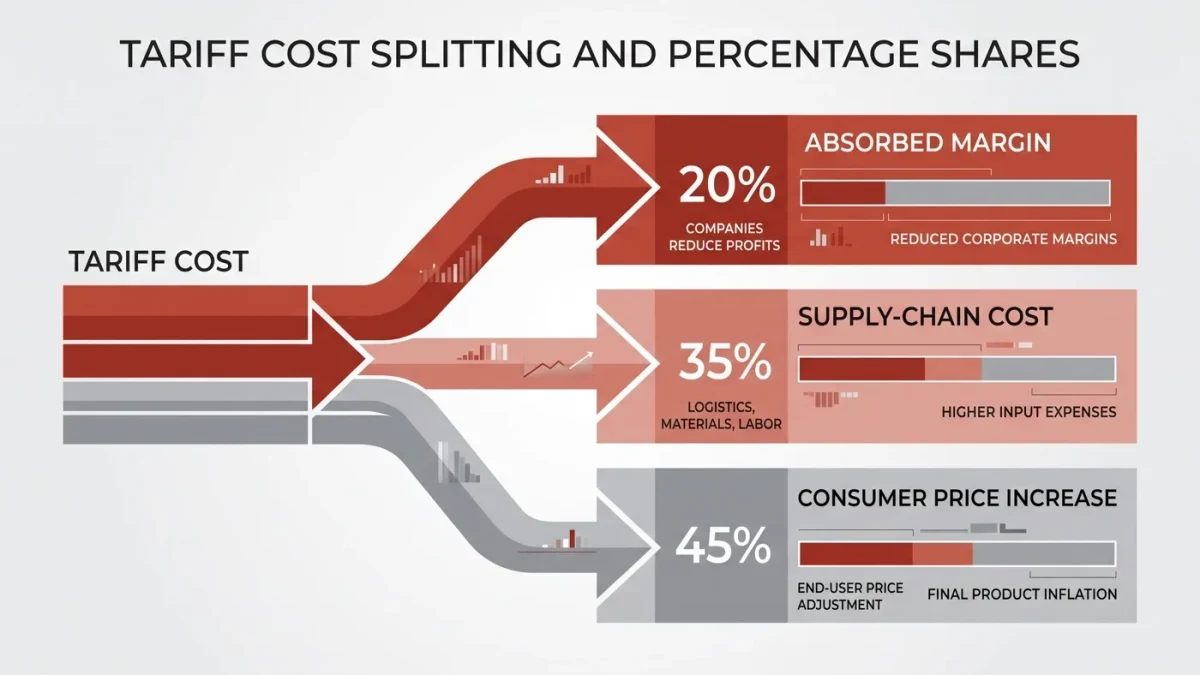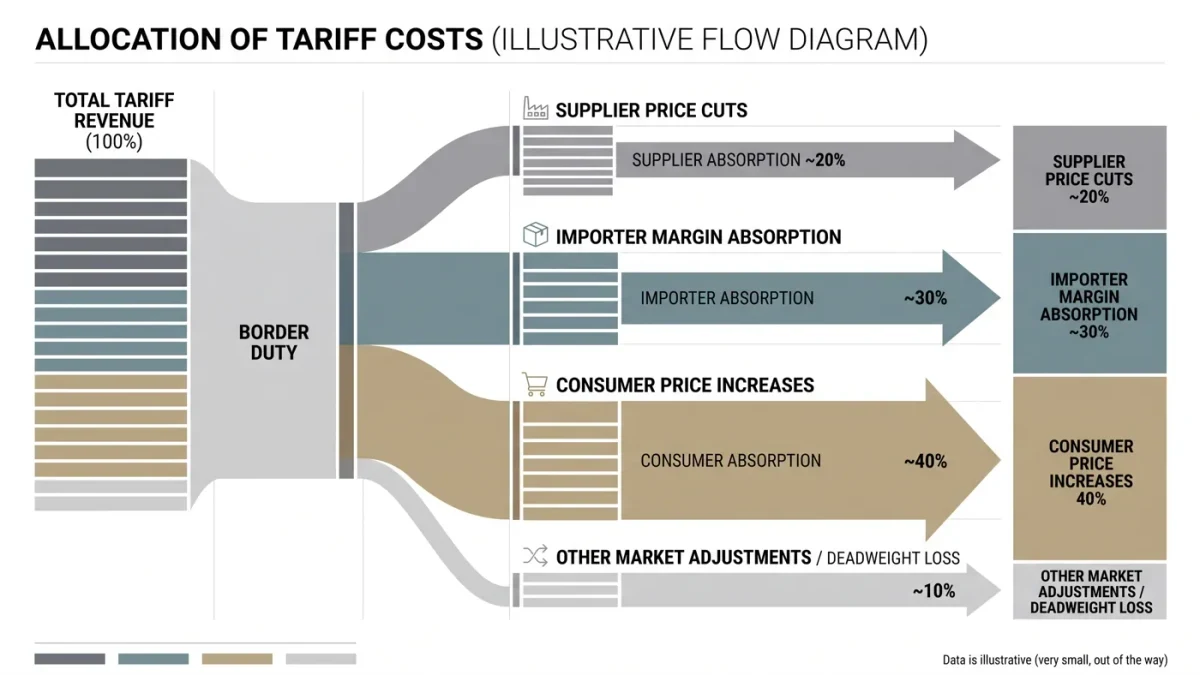
A tariff is a tax collected at the border from the importer of record — not from the exporting country — and whether it reaches the shopper's price is an empirical question each episode answers differently. The 2018 washing-machine tariffs are the clean natural experiment: a 20 percent border tax on imported machines raised U.S. retail prices roughly 12 percent, and prices of dryers — not tariffed — rose nearly as much, because the categories are bundled in retail pricing. Total consumer cost per job preserved ran in the high six figures, per the Federal Reserve-funded study of the episode (Flaaen, Hortaçsu, Tintelnot). In the 2025 tariff round, pass-through estimates from early price data ran well below one-for-one on many goods, with importers absorbing margin and rerouting supply in the short run.
The Daily News 24 publishes information, not policy advice. This explainer covers price mechanics.
Who actually pays a tariff?
Legally, the U.S. importer of record pays Customs at the border — duties are collected by U.S. Customs and Border Protection and, since the 1970s in most academic findings, fall substantially on U.S. firms and consumers rather than foreign exporters. Economically, incidence is shared according to elasticities: the more easily buyers substitute away, the more the foreign supplier eats in price cuts; the more the product is must-have and unrepeatable, the more the buyer eats. The 2018 China tariffs' incidence studies found near-complete pass-through to U.S. import prices by 2019.
What determines pass-through to retail?
Four margins compress or amplify the border tax. Distributor and retailer margins: where the import price is a small share of shelf price (assembled goods with domestic services wrapped around them), a 10 percent tariff moves shelf prices by well under 10 percent. Substitution: buyers switch to untaxed origins or products, forcing absorbing rather than passing. Currency: offsetting exchange-rate moves change the landed cost. Time: contracts signed pre-tariff shield prices until renewal, so pass-through arrives with quarters of lag — and, symmetrically, outlasts the policy.
What happened with the 2025 tariffs?
The 2025 rounds — broad surcharges on major trading partners announced and negotiated through the spring — were larger than 2018's and landed on an import base with thinner substitution options in electronics and apparel. Early measurement was genuinely hard: one-month CPI categories are noisy, front-running of imports pulled purchases forward, and inventory built in late 2024 and early 2025 delayed shelf effects. The consistently observed pieces were logistics behavior — rerouting through third countries where rules of origin allowed, and price increases clustered in tariff-exposed categories like appliances and consumer electronics in the months after implementation.
How do tariffs show up in the CPI?
Only through the categories they touch — goods, roughly a fifth of the index by weight alongside goods-linked services. Tariffs do not directly raise shelter, medical services, or most of the services basket, which is why even high tariffs translate to measured inflation in tenths of a point on the annual rate at partial pass-through. The dynamic risk, per Fed commentary through 2025, is second-round effects: firms citing tariff costs in broader price resets, and wage responses to the one-time level shift.
What should readers watch?
Import price index detail from BLS by origin and category, the tariff-exposed CPI lines month over month rather than year over year, and company gross margins in earnings reports — the absorb-or-pass decision shows up there first. The washing-machine study remains the template: one tax, two appliance categories, and a consumer bill the sticker never itemized.