Private label — retailers' own store brands — reached a record share of U.S. grocery and household-product spending in 2024, with unit share across outlets topping 25 percent and dollar share near 20 percent, according to Circana and the Private Label Manufacturers Association. The pandemic-era price spike pushed shoppers to try store brands; the persistent finding of the data since is that most of the switch stuck. In prior cycles, private label penetration ratcheted up in recessions and partially receded in recoveries. This cycle's ratchet did not fully release.
Figures cited are industry datasets, not market calls.
How is private label share measured?
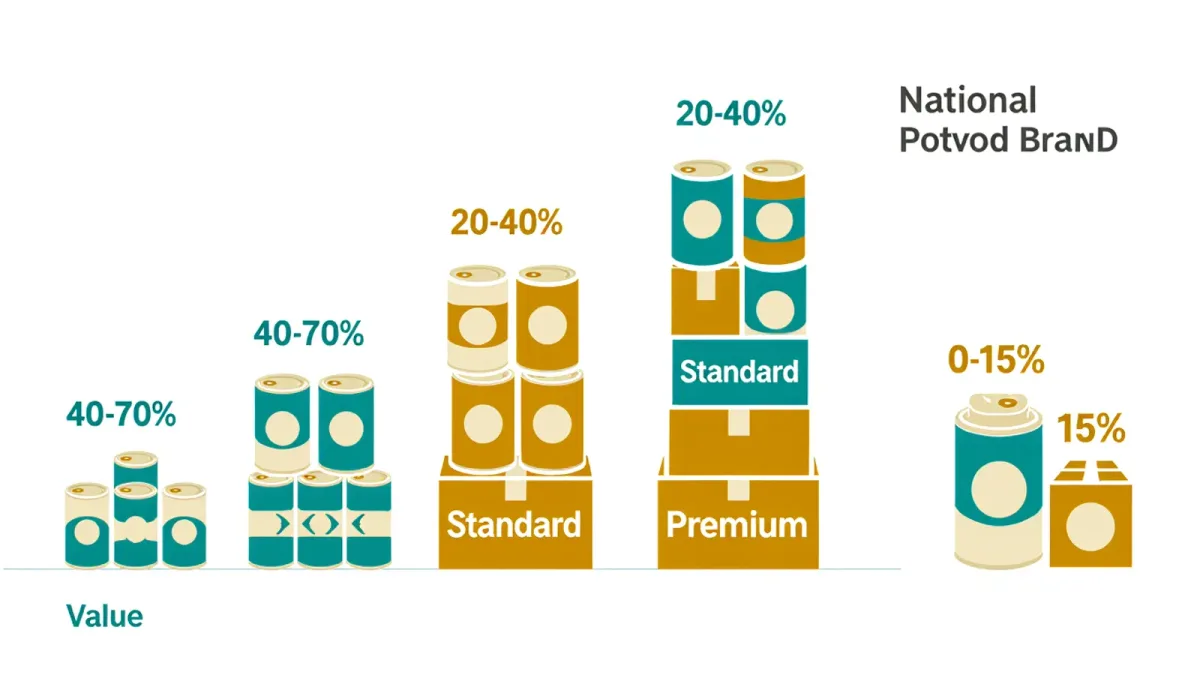
Circana and NielsenIQ scan retailer checkout data and survey panels, counting any brand owned by the retailer rather than a national manufacturer — from Costco's Kirkland to Target's Good & Gather to Kroger's Private Selection. Unit share and dollar share differ because store brands carry lower price points: roughly 20 cents less on the dollar versus comparable national brands across center-store categories, wider in categories like over-the-counter drugs where the same factory often makes both.
Why did the 2021–2024 switch stick?
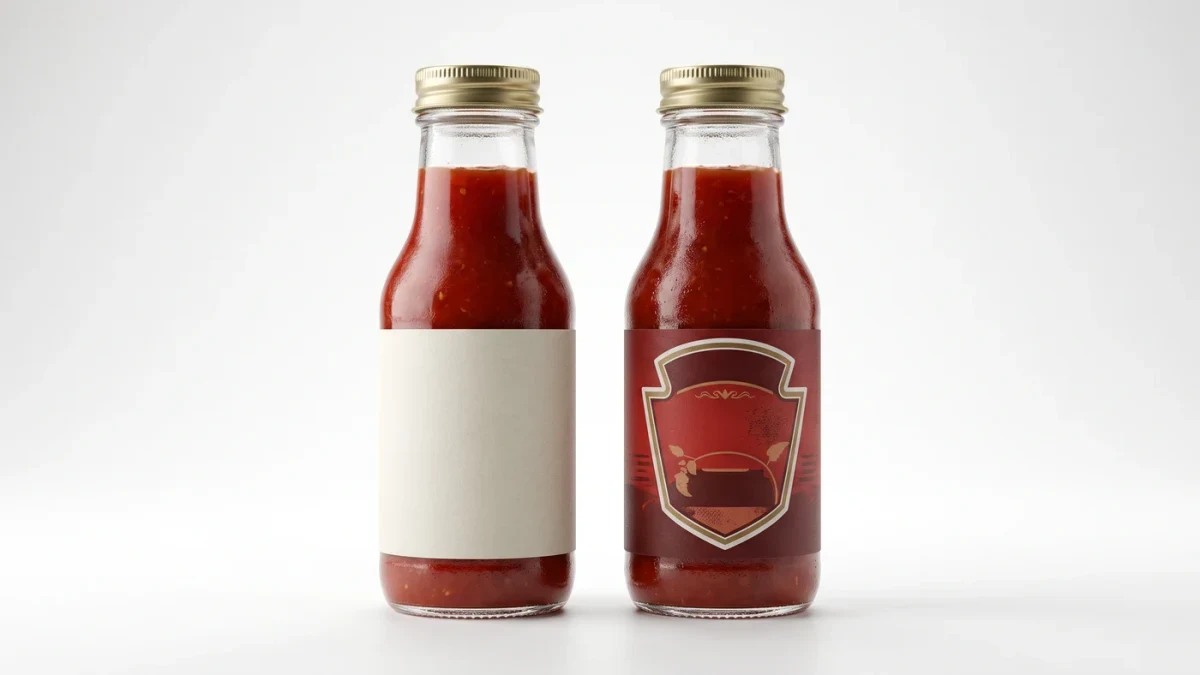
Three mechanisms. Quality convergence: retailer brands moved from generic to premium tiers — Kirkland's success made store brands a destination rather than a compromise. Retailer economics: private label carries higher gross margin percentage for the grocer and insulates shelf prices from manufacturer price increases, so chains promoted their own lines aggressively during the inflation spike. And habit: switching costs are one decision, and repeat purchase rates on tried store brands ran high in PLMA-cited panel data through 2024. When food inflation cooled toward 2 percent by mid-2025, share held near records instead of reverting.
Where does private label win and lose?
Penetration is deepest in commodities with low differentiation — bottled water, milk, flour, trash bags, over-the-counter medication under store branding — and thinnest in categories where the national brand is the product: soda, certain snacks, infant formula post-2012, and laundry care historically. European benchmarks matter for the ceiling: private label runs near 30–40 percent of grocery in the U.K., Germany, and Spain, a gap analysts treat as headroom for the U.S. figure, with the ceiling set by how concentrated U.S. grocery retailing is — chains with national scale can fund better store-brand development.
What do national brands do about it?
The documented responses: tiered portfolios defending price gaps at the entry level, promotional depth concentrated on highest-risk categories, and innovation cadence accelerated where store brands copy slowly. Manufacturer earnings calls through 2023–2025 repeatedly framed "value" as the battlefield — smaller pack sizes at lower shelf prices, entry-tier lines, and bundling. Retail media networks added a twist: manufacturers can now pay the retailer for placement that competes with the retailer's own brand, an incentive structure worth watching in any market-share dataset.
What should readers watch next?
Two published series: Circana's quarterly private label tracking and PLMA's annual reports based on it. The number to watch is not the level but the give-back — how much share store brands surrender in the next twelve months of disinflation. Historically the answer after every cycle since 2008 has been: less than the last time.