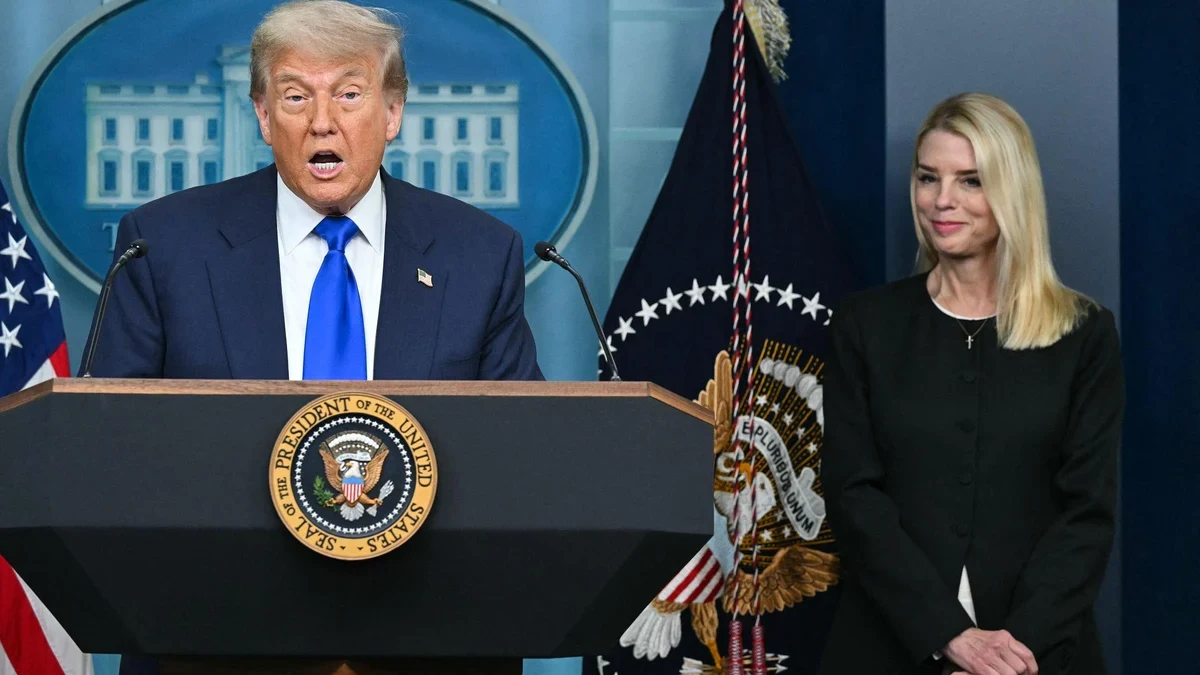
President Donald Trump says he is rolling back Biden-era fuel economy rules for cars, announcing new standards he argues will lower car prices and push more production into the United States. The announcement, made on social media on Saturday, would end what he calls an "EV mandate" — though no federal law requires Americans to buy electric cars.
The fight sits inside a system most drivers have never heard of: Corporate Average Fuel Economy, or CAFE, standards. Congress created CAFE in 1975, and it shapes what automakers build, what those cars cost, and how much drivers pay at the pump. That makes the mechanics worth understanding, whatever one thinks of the politics. For households weighing a purchase, the rules also interact with financing costs — see how Auto Loan Rates and the Fed Rate move together when budgeting for a car.
What are CAFE standards?
CAFE standards are federal requirements that automakers meet average fuel economy targets across all cars and light trucks they sell. A brand that sells an inefficient vehicle must also sell a more efficient one to comply. The average, not the individual model, is what the law judges. Readers following this should also see How the Fed Funds Rate Reaches Savers and Borrowers.
Congress established the system in 1975. It has been the main federal lever on how thirsty the American car fleet is for five decades, and every administration since has adjusted it in one direction or the other.
What did the Biden rules require?
Under rules finalised by the Biden administration in 2024, the required fleetwide fuel economy was scheduled to rise from 39.1 miles per gallon to about 50.4 mpg by 2031. The administration said then that the measures would cut fuel consumption and emissions to combat climate change while saving motorists money at the pump.
Those requirements pushed manufacturers to ramp up electric vehicle production, because EVs help an automaker's fleet average. Congress, controlled by Republicans, gutted consumer tax incentives for electric vehicles last year as part of Trump's One Big Beautiful Bill Act — a reminder that the two levers, standards and subsidies, do not always pull the same way.
What is Trump proposing instead?
Trump did not provide details on the new standards in Saturday's announcement. But in December 2025 he proposed setting the industry fleetwide average for light-duty vehicles at roughly 34.5 mpg by 2031 — more than 30 percent lower than the Biden-era rule.
In a reposting of the announcement, Transportation Secretary Sean Duffy said an announcement would be "COMING MONDAY". Al Jazeera has reached out to the White House for comment.
Is there actually an EV mandate?
No. Trump and Republicans use "EV mandate" to describe the higher fuel efficiency requirements instituted under Biden. But there are no federal guidelines or laws that require Americans to buy electric cars or bar the sale of petrol-powered ones.
The phrase is doing political work: it frames an averaging rule on manufacturers as a directive aimed at consumers. Both readings matter. Automakers responded to the averaging rule by building more EVs; consumers were never obliged to buy them.
Who benefits from each side of the argument?
The incentive structure is worth stating plainly before the evidence. Looser standards lower compliance costs for automakers, which Trump argues translates into lower prices — "saving families thousands on a new, beautiful, and safe car," in his words. That saving claim is the president's own assertion, not an independent estimate.
The other side of the ledger: the Biden administration argued its rules cut fuel consumption and emissions while saving motorists money at the pump. Both arguments can be sincere and both can be self-serving; the standards shift costs between the showroom and the fuel station, and between manufacturers and regulators. Which trade a driver prefers depends on how long they keep a car and how much they drive — the same arithmetic that shapes broader household borrowing choices covered in the Finance section.
What should readers watch next?
Three open questions follow from the announcement. First, the actual numbers: no final standard has been published, and the December 2025 proposal — roughly 34.5 mpg by 2031 — is the only concrete benchmark on record. Second, the legal path: the US Transportation Department has said Biden fuel economy rules exceeded legal authority, which signals the rollback will travel through rulemaking and likely litigation. Third, manufacturer behaviour: how quickly automakers reweight their fleets once the compliance math changes.
The evidence so far establishes the direction of policy, not its final shape. Until the standards are published, every price and fleet projection attached to them is an argument, not a fact. For readers tracking how policy shifts feed through to household costs, the wider picture sits in the Economy coverage.
Sources: aljazeera.com