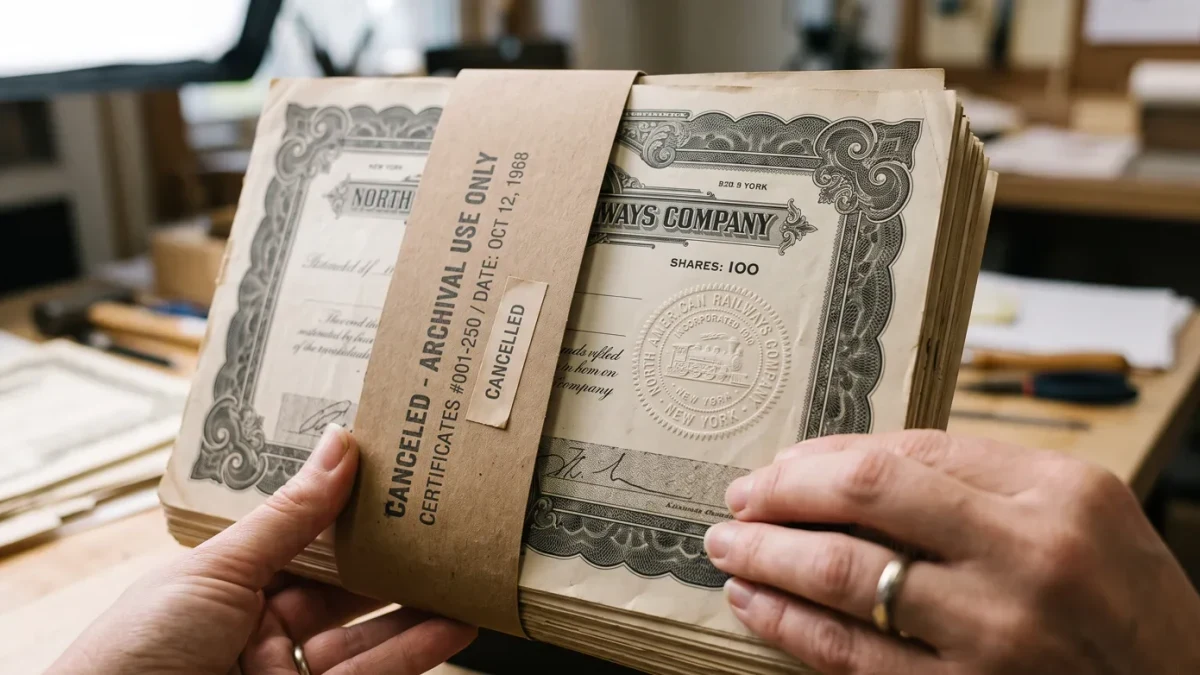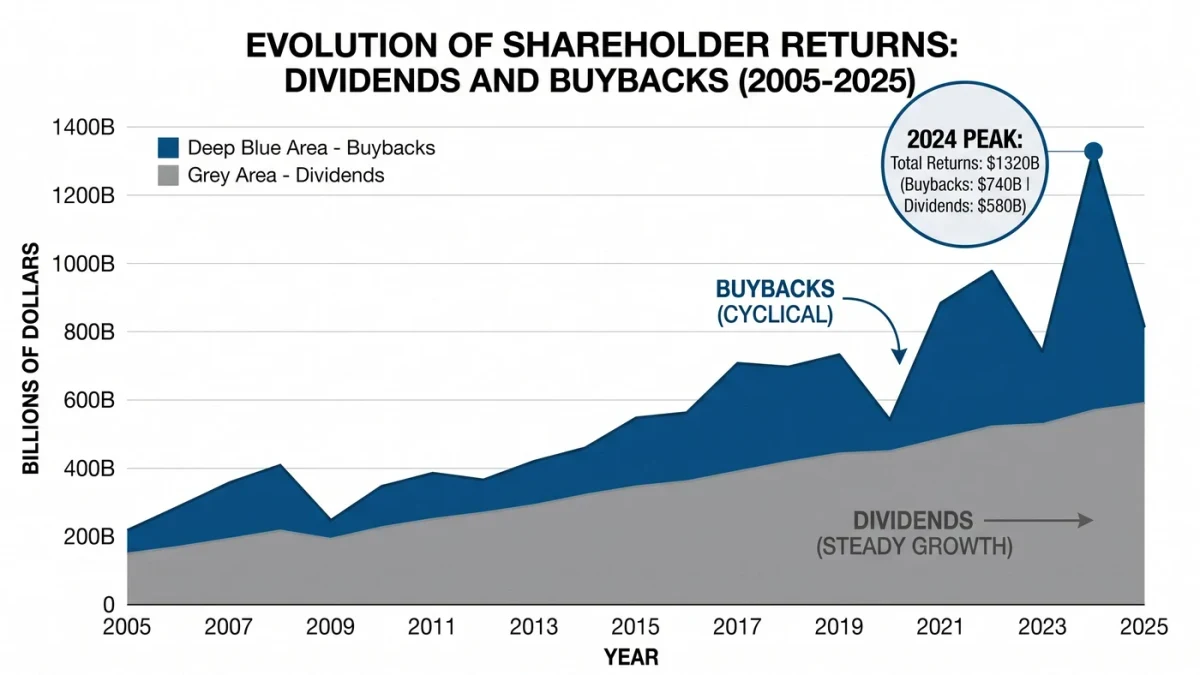
A share buyback is a company spending its own cash to repurchase its stock, retiring the shares and shrinking the count outstanding. S&P 500 companies repurchased roughly $940 billion in 2024 — for years the largest use of earnings ahead of dividends — through programs authorized by boards and executed either in the open market or, occasionally, via accelerated share-repurchase contracts that deliver the shares immediately. The mechanics are simple; the interpretation is where the arguments live, because a buyback changes share count and nothing else.
This explainer covers a capital-return mechanism.
What are the mechanics?
A board authorizes a program — say $20 billion over several years, no obligation to spend it. Open-market purchases then occur within SEC Rule 10b-18's safe harbor: volume, price, and timing limits that prevent a company from dominating its own tape. Announcements accompany earnings; executions appear in quarterly 10-Q filings. Since 2023, a 1 percent federal excise tax applies to net repurchases under the Inflation Reduction Act — small enough to be a rounding error on most programs, novel enough to have reshaped some year-end timing.
Why do buybacks raise EPS?
Arithmetic, not performance: earnings divided by fewer shares is higher per share. At a price-earnings multiple held constant, the stock price follows. The economic question is whether the company bought well — repurchasing below intrinsic value transfers value to remaining holders; repurchasing above it destroys it, identically to any overpriced acquisition. Studies of buyback execution find companies are, at best, indifferent timers: heavy buying at cycle peaks is a documented pattern, and the 2018 and 2021 peaks of repurchase activity preceded drawdowns.
Buybacks vs. dividends: what differs?
Dividends are committed and sticky — cutting them signals distress, so boards set them at sustainable levels. Buybacks are discretionary, adjustable quarter to quarter, which is why they lead the cycle: they get cut in recessions first. Tax treatment differs by investor and jurisdiction; signaling differs — a dividend promises, a buyback opportunistically takes. Firms use both, dividends for the base return, buybacks for the flex above it, and the aggregate payout ratio combining them has been the stable fact for decades.
What are the criticisms?
The recurring charge: buybacks crowd out investment. The evidence is mixed — economy-wide capex did not sag during the buyback boom, and firms with weak opportunities returning cash is the system working. The sharper criticisms are about leverage (debt-funded buybacks that leave firms fragile, prominent in 2015–2019 energy and retail distress and criticized by the Federal Reserve in bank stress contexts) and about the incentive channel: EPS targets in executive compensation are easier to hit with a shrinking share count, so managers with EPS-linked pay have a private reason to prefer repurchases regardless of price. Companies are now required to disclose buybacks' relation to compensation in proxy statements.
How should readers read an announcement?
Three checks: the authorization's size against history and market cap (round numbers recur because they are announcements, not plans); the execution rate — programs complete slowly or never, and the 10-Q shows actual spending; and the funding source — free cash flow versus borrowed money. A buyback executed with surplus cash below intrinsic value is value transfer to remaining shareholders. Everything else is a press release with a ticker symbol.