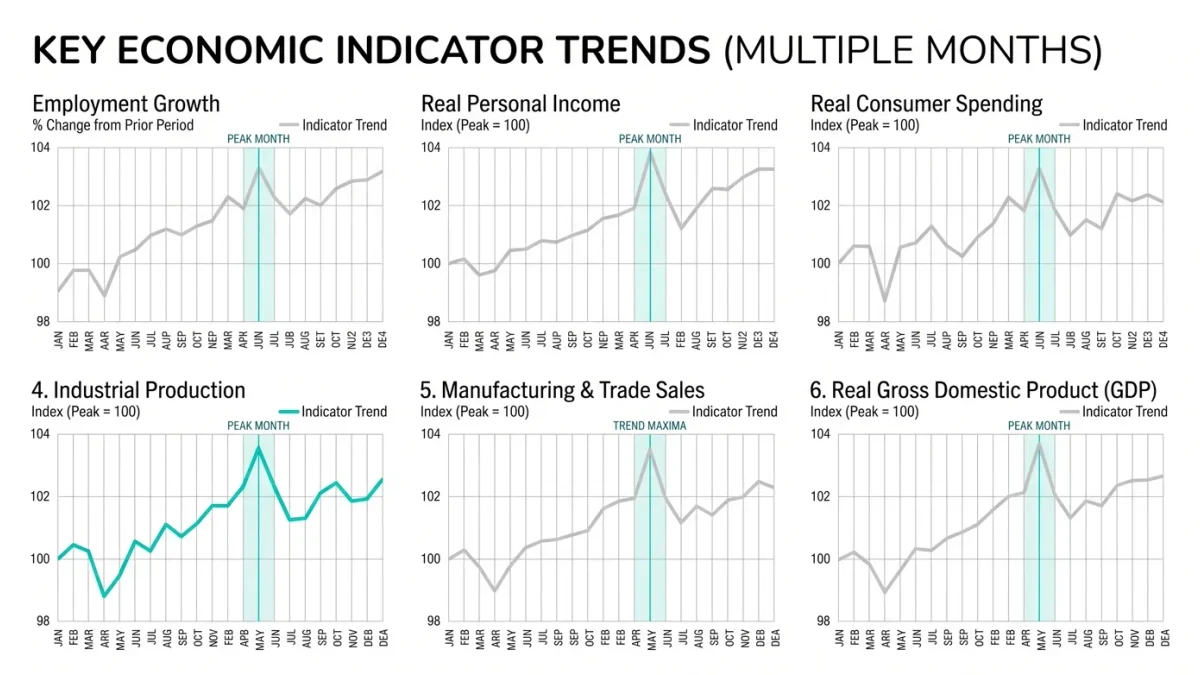
Recessions in the United States are dated by the Business Cycle Dating Committee of the National Bureau of Economic Research, a private research organization, which defines a recession as a significant decline in economic activity spread across the economy, lasting more than a few months, normally visible in real GDP, real income, employment, industrial production, and wholesale-retail sales. The two-negative-quarters rule of thumb is not the definition: 2001 and, by the committee's eventual determinations, other episodes met the standard without two consecutive negative quarters, while 2022's two negative quarters were never called a recession — quarterly figures revised positive, and the labor market added jobs throughout.
The Daily News 24 publishes information, not investment or policy advice. This explainer covers how the official record is kept.
How does the committee work?
About a dozen academic economists, meeting by conference call, examine the monthly indicators — payroll employment and unemployment, real personal income less transfers, industrial production, real consumption and sales — and identify the peak month (the last month of expansion) and trough month (the ending of contraction). The committee emphasizes monthly data because downturns that fit within one quarter would vanish in quarterly averaging; it weights employment heavily in modern practice. There is no fixed formula, and the committee says so explicitly: judgment across indicators whose signals conflict is the whole task.
Why does the call take so long?
Deliberateness and revision. The 2007–2009 recession's December 2007 peak was declared in December 2008 — a year later; the 2020 Covid trough of April was declared in July 2021, the longest deliberate delay, because the committee waited to be confident the reopening was an expansion rather than a bounce. Data revisions move the record: the GDP figures that drive rule-of-thumb declarations in real time are the same figures the revision process routinely rewrites. The committee treats accuracy as worth more than speed, which serves history and leaves journalists and traders to argue with preliminary data in the meantime.
Why did 2022 never get called?
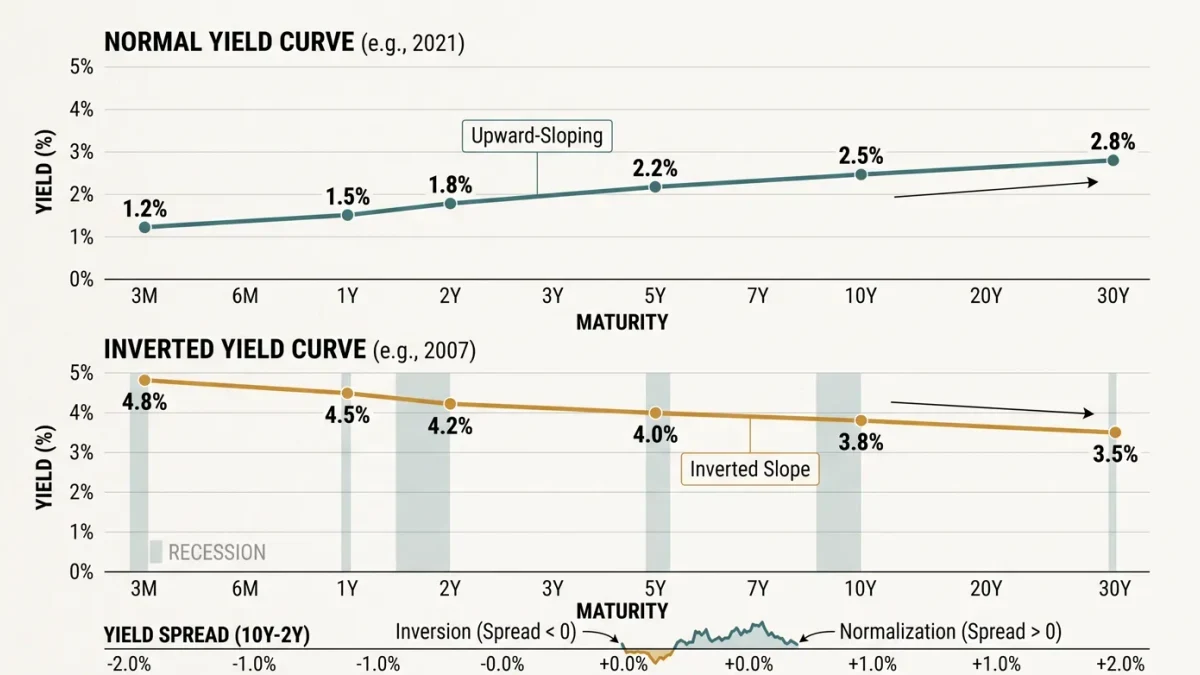
The textbook case of the definition doing its work. Real GDP declined in the first and second quarters of 2022, meeting the rule of thumb, but job growth ran above 300,000 a month, unemployment sat near half-century lows, and household income grew — no decline spread across the economy existed. Subsequent revisions removed even the technical reading. The episode is cited now precisely because 2023–2026 commentary repeatedly invoked recession odds on partial data: the Sahm rule triggering in 2024, yield-curve inversions persisting, layoffs in specific sectors — none of which constitute the breadth the committee requires.
What about the Sahm rule and other triggers?
The Sahm rule — the three-month average unemployment rate rising half a point above its twelve-month low — was designed as an automatic recession signal for fiscal policy triggers, fast rather than precise. It fired in mid-2024 without a recession following, the first false positive of its history, because it was built on a labor market whose weakening now takes the form of slower hiring rather than layoffs. Leading indicators, the yield curve, CEO surveys: each captures one mechanism. The committee's standard is all of them, together, revised.
How should readers use the official dates?
As history, not trading signal: by the time a peak is declared, markets have usually priced the recession and sometimes the recovery. For current conditions, watch the committee's own monthly series — jobs, income, production, sales — and remember that "is this a recession?" is a question about breadth and duration that only looks answerable in real time.