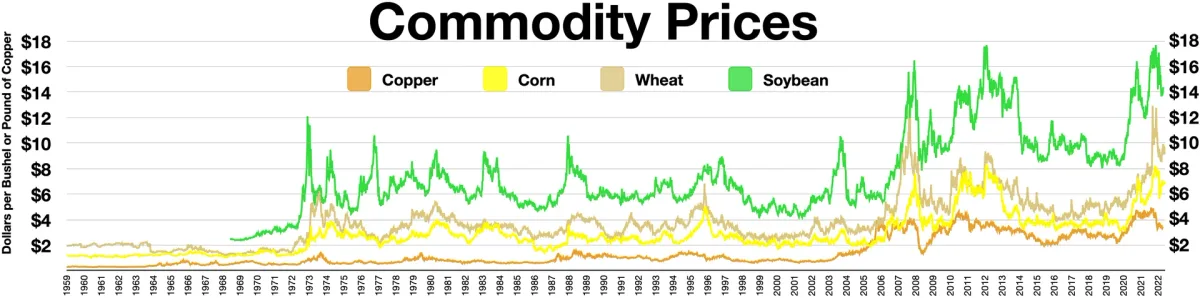
The price of coffee, wheat, or oil starts in a market most shoppers never see. It ends on a shelf tag. The path between the two runs through the supply chain, and every step along that path can bend, delay, or magnify the move.
Knowing the path explains two things at once. It shows why a jump in a raw material can reach your checkout weeks later. It also shows why the shelf price often moves less than the commodity price, because a retail price carries far more than one ingredient.
What Exactly Is a Commodity?
A commodity is an economic good, usually a resource, that the market treats as interchangeable no matter who produced it. Wikipedia's entry on commodities calls this quality fungibility: one producer's wheat is treated as the same as another's. Petroleum and copper work the same way, with supply and demand that form one universal market.
Most commodities are raw materials or farm and mining products, such as iron ore, sugar, rice, and wheat, per the entry. Grown goods such as wheat and rice are called soft commodities. Mined goods such as gold, silver, and oil are hard commodities. Energy commodities include electricity, gas, coal, and oil.
Who Sets the Price of a Commodity?
No single seller sets it. The price of a commodity is typically determined as a function of its market as a whole, and well-established physical commodities trade actively in spot and derivative markets, according to the encyclopedia. One price, many sellers. That is the core difference from branded goods, where brand and features carry more weight than price.
Wide availability cuts margins thin. Wikipedia notes that the wide availability of commodities typically leads to smaller profit margins and diminishes the importance of anything but price. When a cost is this exposed, buyers upstream feel a change quickly.
How Does the Price Travel to the Shelf?
The journey happens inside the supply chain, which Wikipedia's supply chain overview defines as a complex logistics system of facilities that convert raw materials into finished products and distribute them to end consumers. Raw material in, retail product out.
Suppliers sit in tiers. First-tier suppliers sell directly to the client firm, second-tier suppliers sell to the first tier, and so on down a hierarchical network. Each layer performs work, and each layer prices its work. Wikipedia describes the result as profit layering: each tier's operators add a profit margin to their costs, so chains with many tiers can raise total cost along the way.
This is where a commodity move becomes a retail move. A rise in the raw input lands first on the earliest tiers. Processors, then manufacturers, then distributors pass along what they paid, plus their own margin. The last link, the retailer, decides how much of that stack reaches the tag.
Why Doesn't the Shelf Price Move One for One?
Because the tag is a blend. The commodity is one input among many, sitting beside labor, packaging, transport, and the tier margins described above. A swing in the raw material dilutes across that blend. Each tier can absorb part of a change or pass it along, which is why the retail effect tends to arrive in stages rather than in one jump.
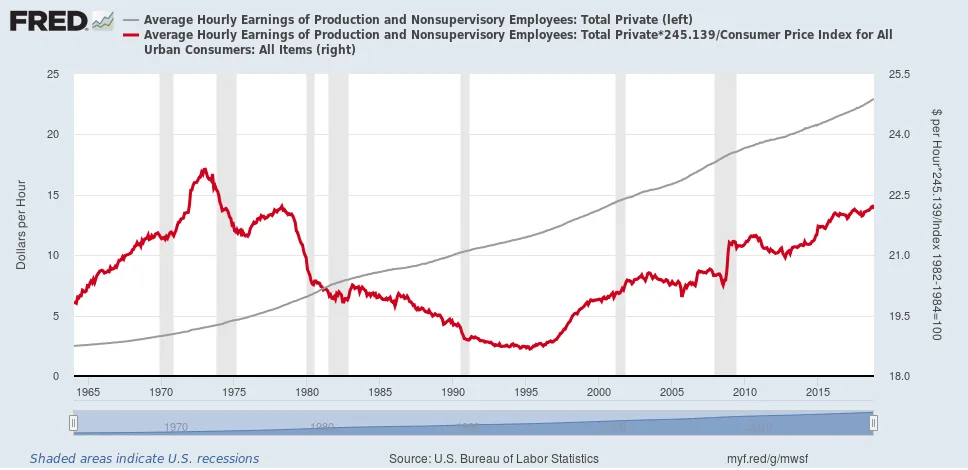
Direction still holds over time. A sustained rise in a core input presses on costs through every tier, per the chain logic Wikipedia lays out. A sustained fall does the reverse. Shoppers see the move gradually, not overnight. This connects to our earlier piece, Core CPI Rose 2.5% Year Over Year in July.
Conclusion: Follow the Chain, Not Just the Commodity
Commodity prices start from one shared market price. Retail prices end as a stack of costs and margins. Between the two sit tiers of suppliers, each adding work and a margin, each smoothing or forwarding the move. Readers following this should also see How the Consumer Price Index Turns 80,000 Prices Into One Number.
Next time a headline moves the price of oil, wheat, or copper, the useful question is not whether the shelf will follow. It is how far the input sits from the final product, how many tiers carry it, and how much of the final price that input really makes up.
This article is general information, not investment or financial advice.