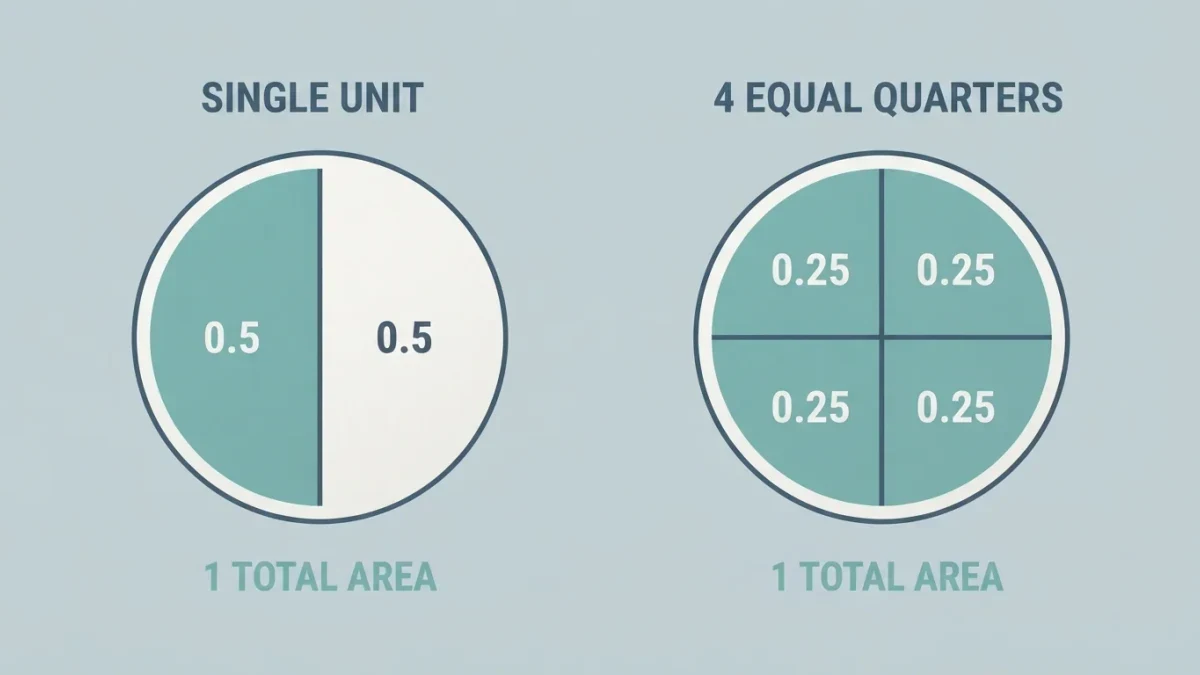
A stock split divides each existing share into multiple new ones — 2-for-1, 3-for-1, and in Nvidia's June 2024 case 10-for-1 — cutting the price per share proportionally while total market value is unchanged. Fifty shares at $100 become one hundred at $50; earnings per share halve; the P/E is identical. Nothing fundamental happens, and yet split announcements are reliably good news for the shares: the event-study literature and recent cases both find average abnormal gains of a couple of percent around announcements, concentrated in bull markets — where splits cluster, because boards split after large run-ups, when signaling confidence is cheap.
This explainer covers a corporate action.
Why do boards split?
The stated reason is accessibility: a lower per-share price keeps round lots — 100-share blocks — within retail reach and, historically, within options-contract economics, since one option covers 100 shares. In the fractional-trading and zero-commission era the practical need has faded, which makes the modern split primarily a signal: a board splitting at highs is telling the market it does not expect the price to collapse back below the old level. Nvidia's 2024 split followed a run above $1,200; Alphabet, Amazon, and Tesla split in 2022 after similar run-ups, and each cited retail employees and investors in the announcement language.
What is a reverse split?
The same mechanics inverted: multiple shares combined into one, multiplying the share price. Companies do it to cure a sub-$1 price — the Nasdaq and NYSE delisting threshold — which is why reverse splits cluster among distressed small caps and carry the associated stigma. Reverse splits preceding exits from leveraged situations sometimes work (several airline and telecom restructurings used them), but the average announcement effect is negative because the average issuer is in trouble. The 1-for-10 ratio is common; anything above roughly 1-for-20 signals desperation by market convention.
Do splits affect index membership or funds?
No index that matters is price-weighted except the Dow Jones Industrial Average, where a split mechanically reduces a component's weight because the divisor arithmetic is built on share price. That made splits strategically meaningful for Dow membership for a century; Apple's 2020 4-for-1 cut its Dow weight and shuffled the price-weighting of the whole index. Market-cap and float-weighted indexes — the S&P 500 and nearly everything else — are split-neutral by construction, adjusting shares outstanding to offset the price change.
What actually happens mechanically?
The board announces a ratio and dates: record date, when holders of record are identified; effective date, when the new shares appear; and sometimes a when-issued trading period. Shareholders do nothing — the broker adjusts positions automatically. Splits require no shareholder vote in most cases, being a board-level certificate amendment; reverse splits often do require one, adding months to distressed timelines.
Should readers trade splits?
The honest framing: splits are information about management sentiment, packaged in a no-op. The announcement pop averages out; the long-run evidence shows post-split stocks slightly underperforming their own momentum in the year after — splits mark run-ups, and run-ups mean-revert. Reading them as a confidence thermometer from the boardroom is fair; reading them as a catalyst is buying the wrapper.