A certificate of deposit is a time deposit: money placed with a bank or credit union for a fixed term at a fixed annual percentage yield, withdrawable at maturity or with an early-withdrawal penalty stated in the contract. The trade is access for certainty — CD rates do not float down when the Fed cuts, which is exactly their function in a falling-rate cycle. After the 2023–2025 rate swings, one-year CD yields at online banks peaked in the mid-4s and began stepping down with each FOMC cut, per rate-tracker data, while existing CDs kept their locked yields to maturity.
This explainer covers how the product works.
How is a CD's rate set?
Banks price CDs off their funding needs: a bank that wants to lock in liabilities for a known duration pays up for the matching term, which is why the CD yield curve sometimes inverts — shorter terms paying more than longer — when markets expect rate cuts. Credit union equivalents, share certificates, price the same way under National Credit Union Administration insurance rather than FDIC. Brokered CDs, sold through brokerage desks, trade in a secondary market where their price moves with rates like bonds — a distinct risk plain bank CDs do not carry, at the cost of liquidity.
What does the early-withdrawal penalty do?
The penalty, disclosed at purchase, is the real option in the contract. Common structures are months of interest — three to six for short terms, up to twelve for five-year terms — and the arithmetic matters at the boundary: withdrawing two weeks into a five-year CD that costs twelve months' interest forfeits roughly a year's earnings on money held two weeks. The exception worth knowing: no-penalty CDs exist at slightly lower yields, and banks occasionally exercise their right to delay withdrawals in aggregate, a contractual clause that matters only in stress.
How does deposit insurance apply?
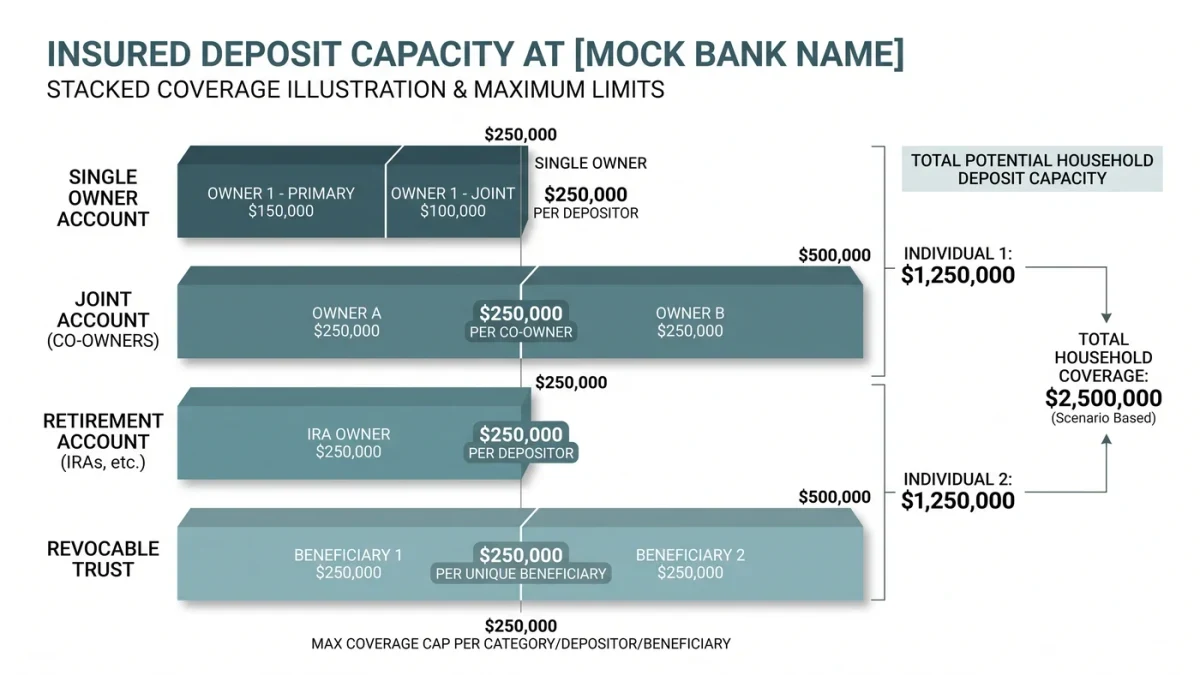
CDs at FDIC-member banks are insured to the standard limits — $250,000 per depositor, per bank, per ownership category — and the insurance follows the account, not the product. A ladder totaling $250,000 at one bank is fully covered; the same ladder spread across banks multiplies coverage legitimately. Credit union share certificates carry the equivalent NCUA coverage. Brokered CDs inherit coverage only if the issuing bank is a member, and coverage limits apply per issuing bank — a detail that matters when brokers aggregate offerings from many banks.
What is a CD ladder?
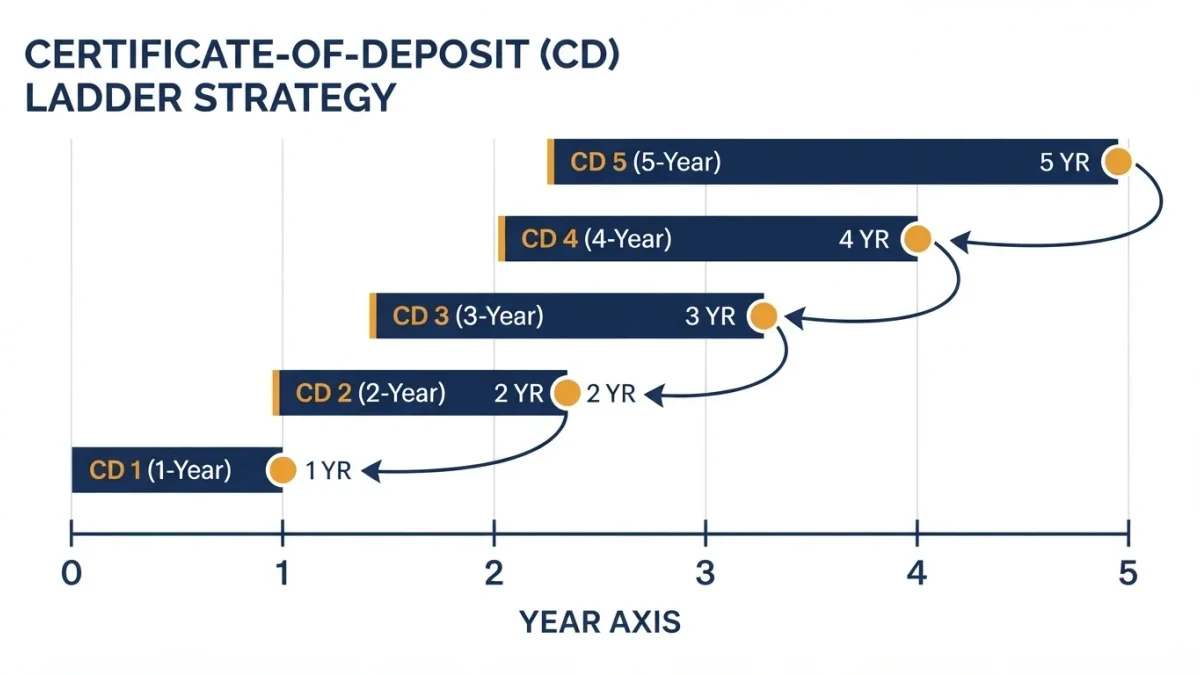
A duration-spreading structure: equal amounts across staggered maturities — say one through five years — so a portion matures each year for reinvestment at then-current rates. The cost is earning the blended rate rather than the peak of any single term; the benefit is never being fully locked at the wrong moment. Ladders became the default recommendation during the 2024–2025 cutting phase precisely because no one knows the path of rates — including the people setting them.
When do CDs beat savings accounts and Treasuries?
Against a variable savings rate, a CD wins when rates fall over the term and loses when they rise, minus the penalty asymmetry. Against Treasury bills and notes of the same maturity — comparable credit risk in practice, government-backed — the comparison is after-tax yield versus the state-tax exemption on Treasury interest, plus the penalty-versus-sale-cost difference for early exit. The honest summary: a CD is a dated bet that rates will not rise enough to make the lock painful, taken with insured principal and a known exit price.