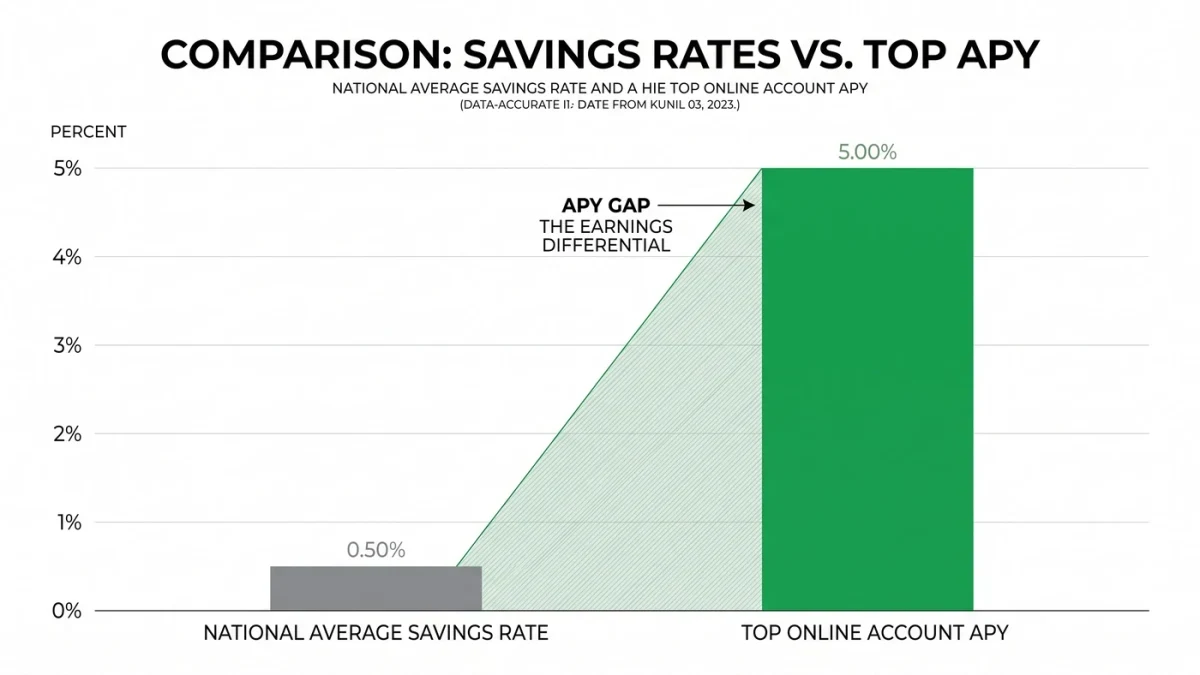
A high-yield savings account is a standard FDIC-insured deposit account whose rate, in practice, is simply competitive: as of late 2025, top online accounts paid in the mid-3 to low-4 percent range after the Fed's cuts, while the national average across all savings accounts sat near 0.4 to 0.6 percent, per FDIC weekly rate data. No regulation defines "high-yield" — the label is marketing for accounts, usually at online banks, that actually compete for deposits. The gap between the best and the average, at times exceeding 4 full percentage points, is one of the largest risk-free spreads in consumer finance, paid for entirely by inattention.
Rate levels cited are official weekly data, not offers or predictions.
Why can online banks pay more?
Cost structure and competition. Branchless banks carry lower overhead and compete nationally for rate-sensitive money, so they price deposits near the marginal funding cost a bank would otherwise pay in wholesale markets. Large branch banks price to their deposit base: customers who choose a bank for its branches are less likely to move for yield, so the bank pays less — the deposit betas documented in Federal Reserve research run far below one at the giants and near one at online lenders. Same insurance, same product, different customer elasticity.
What rules govern the account?
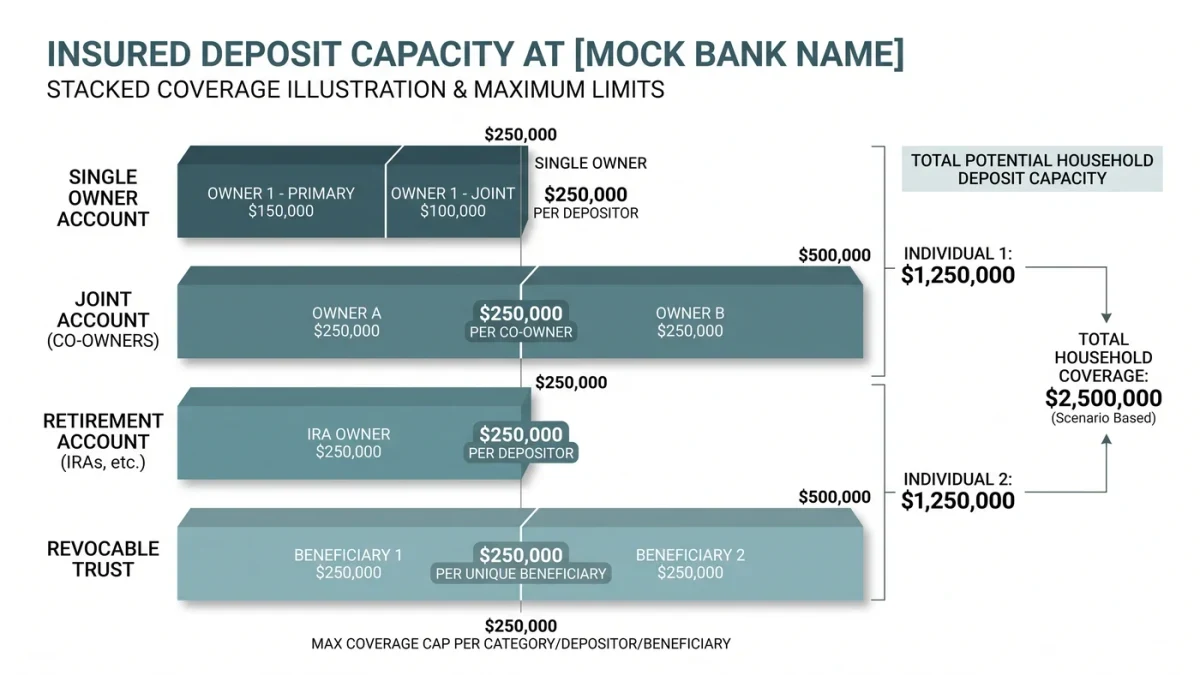
Deposit insurance to $250,000 per depositor, per bank, per ownership category, as with any FDIC-member account; federal law removed the old limit of six convenient transfers per month in 2020, though banks may still impose their own caps; and rate changes are at the bank's discretion with notice — these accounts are variable, repricing down as the Fed cuts, which is the trade a certificate of deposit exists to escape. Teaser and tiered rates are common marketing: an introductory APY that reverts after a period, or headline tiers requiring large balances, both disclosed in the account terms.
How should savers evaluate one?
Four lines in the disclosure: the current APY and whether it is promotional; the compounding frequency (daily is standard, and differences are basis points); fee schedule, especially monthly maintenance and excess-withdrawal fees that can erase months of interest; and transaction limits matching your usage. Then the standard insurance check for large balances — amounts above $250,000 at one bank belong at another bank, not in the same one under a different label. Rate-chasing has its own cost: moving money takes days, and the marginal basis points between the fifth-best and best account are usually smaller than the interest lost in transit.
What are the alternatives at similar safety?
Money-market funds hold Treasury and repo paper and yield close to the effective fed funds rate — competitive with the best savings accounts but SIPC- rather than FDIC-protected, a distinction that mattered for days in March 2020. Treasury bills carry explicit government backing and state-tax exemption on interest, at the cost of purchase mechanics. CDs lock rates that savings accounts will not. The products converge in yield and diverge in plumbing — the right choice is mostly about which mechanics fit the money's purpose.
What happens when the Fed keeps cutting?
Variable rates follow the policy rate down, typically within one to two FOMC meetings, as they did through 2024–2025 when top yields stepped down from the mid-4s. The structural fact survives the cycle: the spread between competing accounts and average ones persists at every policy level, because it is a difference in market discipline, not in rates. Checking it once a year is the cheapest raise available.