A credit card grace period is the window — at least 21 days after the statement closes, under the CARD Act — during which a cardholder can pay the statement balance in full and owe no interest on purchases. Federal Reserve Regulation Z requires that cards offering a grace period extend it to balances paid by the due date. A balance transfer moves existing debt to a new or existing card, usually at a promotional APR — frequently 0 percent for 12 to 21 months — for a fee, typically 3 to 5 percent of the transferred amount. One mechanism makes interest avoidable; the other refinances it. Both operate on contract terms disclosed at signup, which is where their traps also live.
This explainer covers credit-card mechanics.
How exactly does the grace period work?
Purchases made during a billing cycle post to the statement; if the statement balance is paid in full by the due date, no interest accrues on those purchases. The subtlety: carrying any balance revokes the grace period on new purchases at most issuers — interest starts accruing from the purchase date — until the balance is cleared for, typically, one to two consecutive cycles. Cash advances never receive grace: they accrue from day one at higher rates. The 21-day minimum applies between statement and due date, and payments received by 5 p.m. on the due date count as on time.
What are the balance-transfer mechanics?
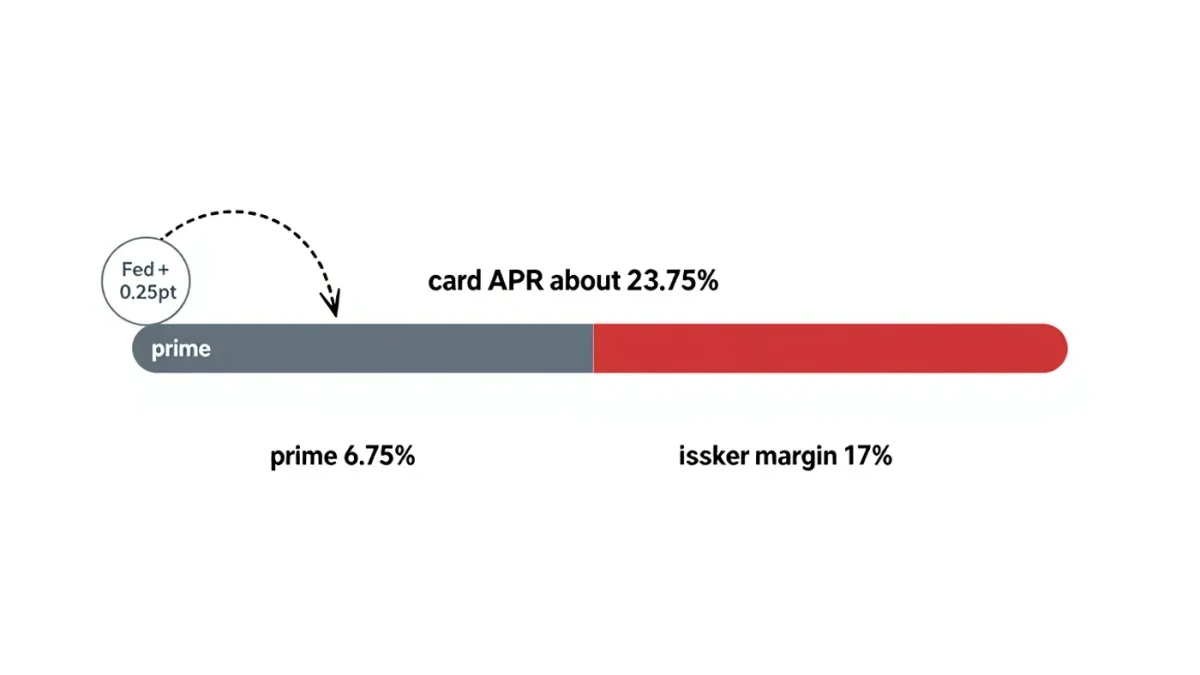
The promotional APR applies to the transferred amount for the stated period; the transfer fee is added to the balance upfront. Two rules dominate outcomes. First, allocation: under CARD Act rules, payments above the minimum must go to the highest-APR balance first — which means new purchases at the standard rate sit accruing while the promotional balance amortizes, unless the card also carries a purchase promotion. Second, the reversion: when the promo expires, the remaining balance accrues at the standard variable rate, which in the mid-2020s meant above 20 percent. The arithmetic that matters is whether the transferred balance can be cleared inside the window; the fee is paid regardless.
What are the known traps?
Losing the grace period while carrying a transfer balance, so every new purchase accrues immediately. Issuers that exclude promotional balances from the payment-allocation protection. Deferred-interest retail offers — distinct from true 0-percent APR — where interest accrues retroactively from the purchase date if any balance remains at promotion end, a structure the Consumer Financial Protection Bureau has repeatedly flagged around medical and furniture financing. And the debt-reload failure: transferring a balance while rebuilding the original card's balance, which doubles the problem in a year.
When does a transfer actually pay?
The comparison is the transfer fee against the interest that would otherwise accrue: roughly, a 3 percent fee on a balance that would accrue 20-plus percent APR for six months pays for itself several times over; the same fee on a balance cleared in two months may not. The discipline conditions: no new purchases on the transfer card, a payment schedule that clears the balance before expiry, and on-time payments — a single late payment beyond 60 days can trigger penalty pricing on the whole structure.
What are the alternatives?
Personal installment loans carry fixed rates and terms without the reversion cliff, at rates that beat standard card APRs for prime borrowers; hardship plans negotiated with the issuer cut rates without new credit applications; and nonprofit credit counseling arranges debt-management plans with structured paydown. The transfer is the cheapest tool when the timeline is certain and the behavior holds — its failure mode is certainty about a timeline that was always hopeful.