Annual Percentage Rate (APR) and Annual Percentage Yield (APY) are both year-scale interest measures, but they answer different questions. APR approximates the yearly cost of borrowing without compounding; APY states the yearly return on a deposit with compounding included. A loan quoted at 5 percent APR costs less over a year than a savings account "paying the same rate" earns, because the APY on that account — with monthly compounding — is 5.12 percent, while the APR on the loan excludes the effect of interest-on-interest entirely. Lenders advertise APR; banks advertise APY; both are required disclosures under federal truth-in-lending and truth-in-savings rules.
This explainer covers how the two measures work.
What does APR include — and leave out?
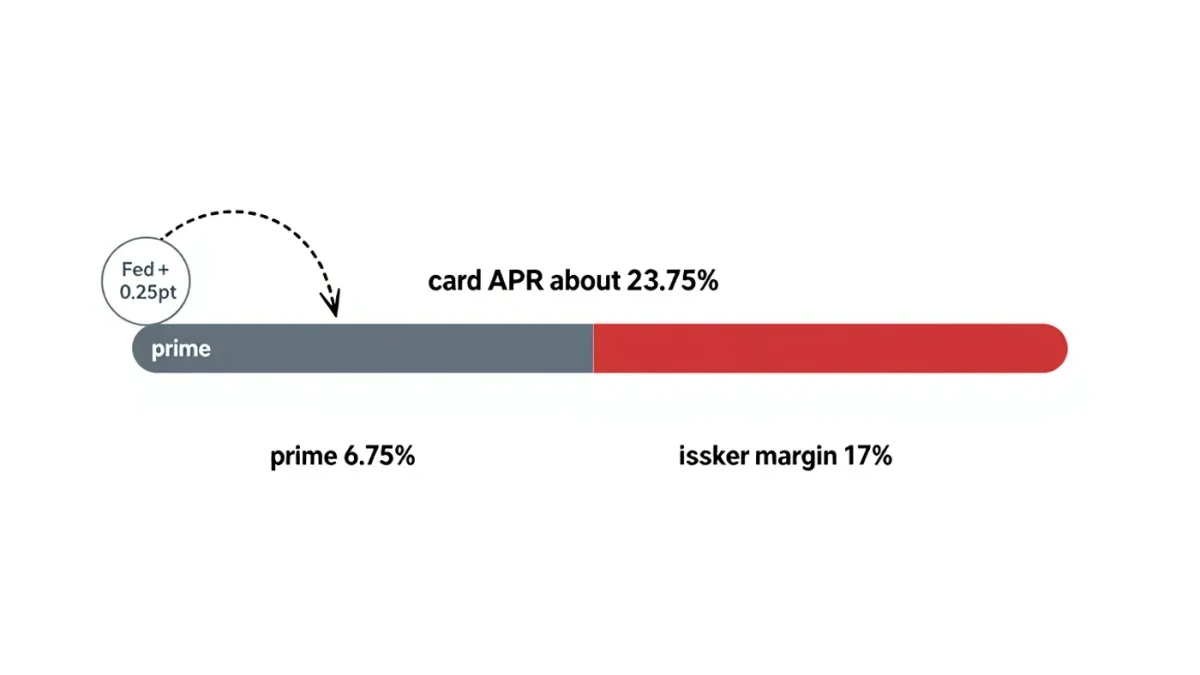
Under the Truth in Lending Act, APR on a consumer loan folds in certain costs of credit — origination and certain fees — expressed as a yearly rate, so it can exceed the nominal note rate on a mortgage. It deliberately ignores compounding, which barely matters for amortizing installment loans. What APR does not capture: the full fee stack on some products. Credit card APRs exclude annual fees, balance-transfer charges, and penalty pricing, so a no-fee 22 percent card can be cheaper in use than a 20 percent card with a $95 fee for a small balance. APR is the floor of comparison, not the ceiling.
How does APY capture compounding?
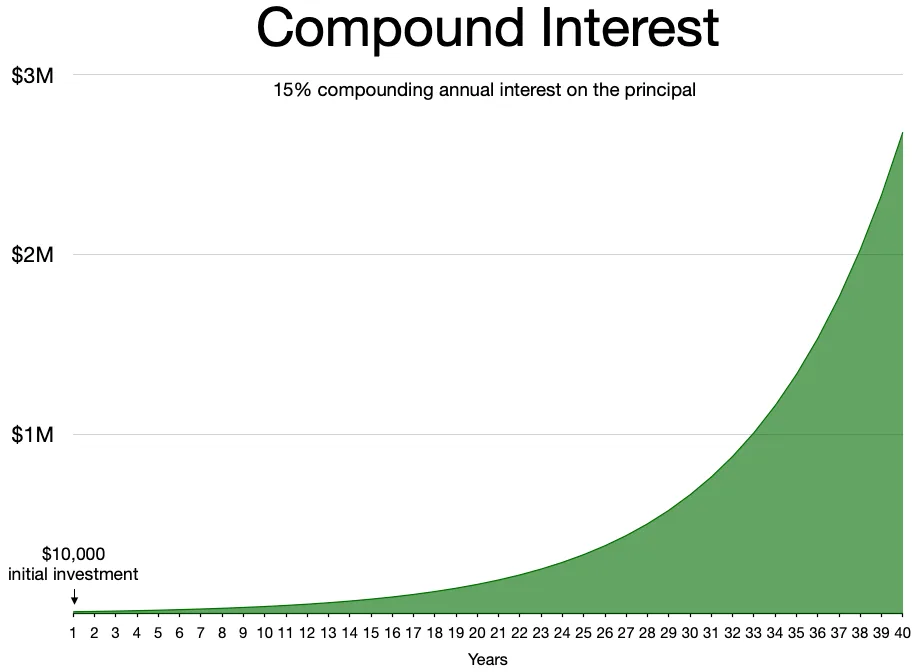
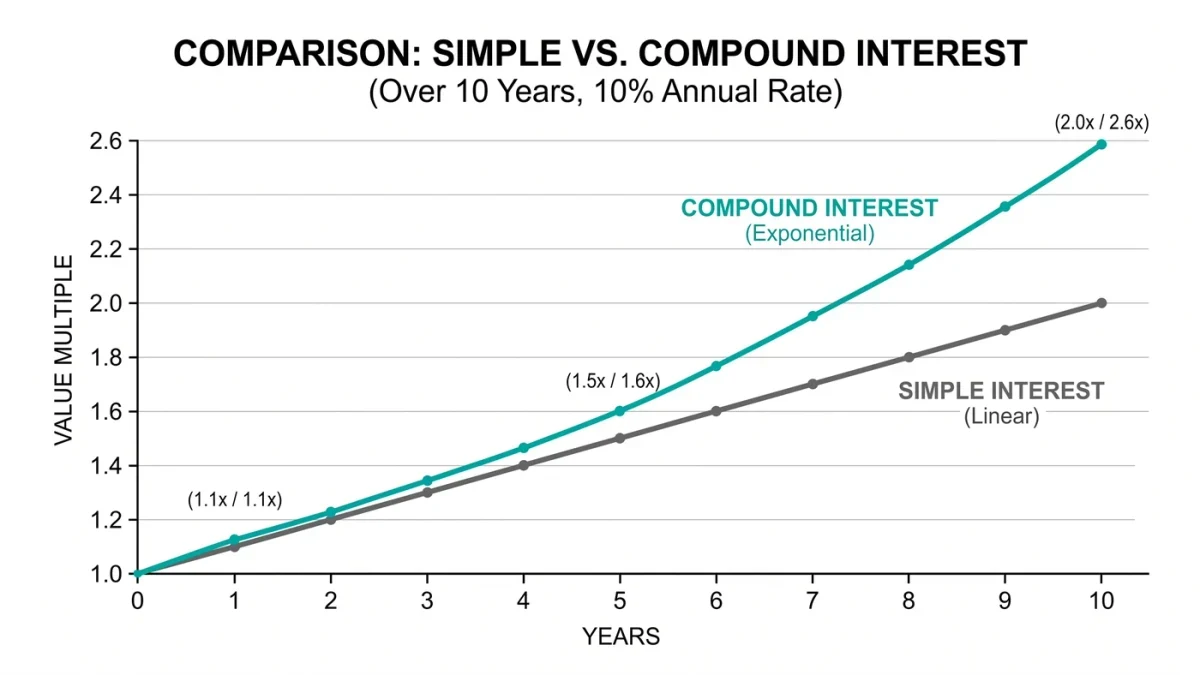
APY applies the compound formula: a 5 percent nominal rate compounded monthly yields 5.12 percent APY; daily compounding gives 5.13 percent. Under the Truth in Savings Act, deposit accounts must disclose APY so savers can compare accounts without recomputing compounding themselves. The practical consequence: two accounts quoting the same nominal rate with different compounding frequencies differ trivially — a few basis points — while differences in the nominal rate itself dwarf any compounding choice. Compare APY to APY and move on.
Why do the numbers diverge on longer horizons?
Compounding's power scales with time and rate. At 5 percent over a year, monthly compounding adds 12 basis points; at 20 percent, it adds about 219 — the difference between a 20 percent and a 21.9 percent effective cost or yield. That is why credit card interest is quoted as APR but the effective cost of carrying a balance compounds at APY-equivalent speed, and why the distinction matters most exactly where rates are highest.
What about APY on promotional offers?
Teaser rates, bonus periods, and "up to" ranges are marketing built on the same measures. A promotional APY that expires in six months, a bonus that requires a qualifying deposit, and a tiered rate that pays the headline figure only above a balance threshold all make the disclosed APY a conditional promise. The disclosure box states the conditions; the headline does not.
How should consumers compare across the two?
The rule that resolves most confusion: for any product, ask which measure makes it look better, then verify whether the disclosure uses that one. Compare loans by APR including the fees you will actually pay, and deposits by APY with the conditions attached. One number is not the other's opposite — they are different instruments pointed at different customers, and each side of the counter quotes the one that flatters it.