Every claim about future money leans on two rates. The discount rate turns tomorrow's cash into today's terms. The risk-free rate is the floor under all the rest. Mixing them up makes any return look better or worse than it really is.
The two rates answer different questions. The discount rate asks what a future payment is worth right now. The risk-free rate asks what money can earn when nothing goes wrong. Put together, they explain why safe returns sit low and risky ones have to promise more.
What Is the Discount Rate?
Discounting is finance's way of comparing money across time. Wikipedia's entry on discounting describes the time value of money: a payment has a future value and a present value, and the two are not equal. Money in hand can be invested, so money promised later is worth less today.
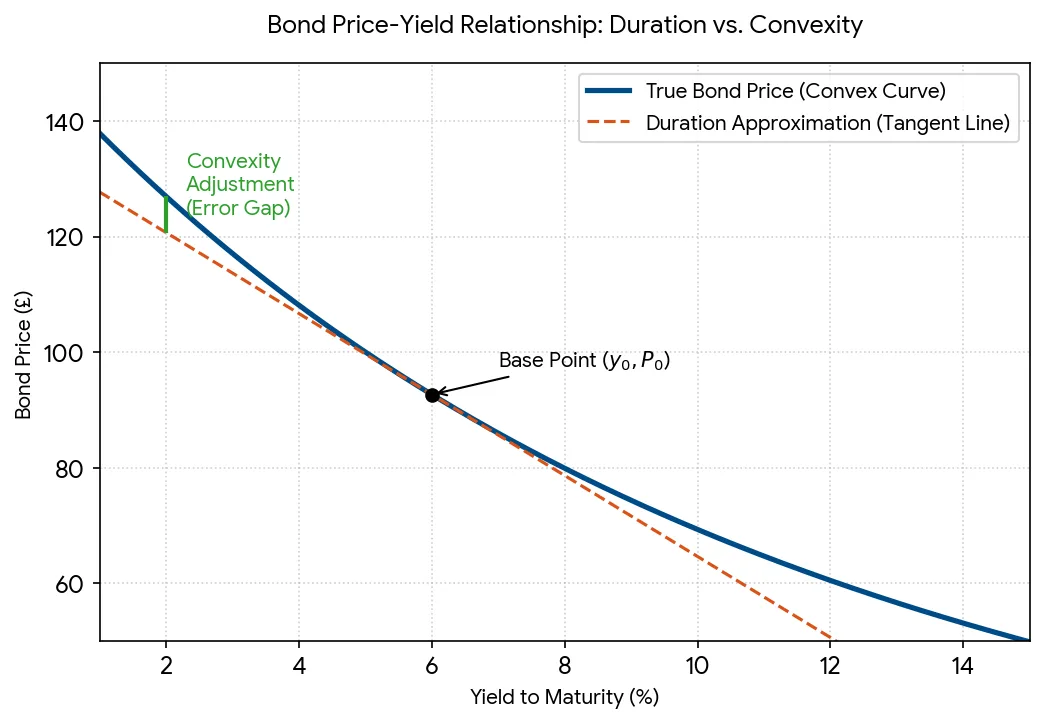
The discount rate is the rate at which that value gap grows as the wait gets longer, per the entry. It works in both directions. Push a payment further out and its present value shrinks. Raise the discount rate and the same payment shrinks faster.
The arithmetic is simple enough to test. Wikipedia works one example in the entry: $100 promised in five years is worth $56.74 today when the rate is 12% per year. A lower rate would discount less. A longer wait would cut deeper. We covered a connected angle in How the Consumer Price Index Turns 80,000 Prices Into One Number.
What Is the Risk-Free Rate?
The risk-free rate is the rate of return of a hypothetical investment that is assumed to meet all its scheduled payments, according to Wikipedia's risk-free rate entry. No default, no missed coupons, no surprise. Because such a return can be obtained with no risk, the entry notes that any investment carrying some risk must offer a higher rate of return to induce anyone to hold it.
That sentence is the hinge of the whole topic. The risk-free rate is not just another rate. It is the baseline every risky promise has to beat before anyone accepts the risk.
In practice the rate is proxied, not observed. Market participants often use the yield on a government bond in the same currency whose default risk is seen as negligible, per the entry. Returns on short-term US Treasury bills, for instance, are sometimes read as the risk-free rate in dollars. Wikipedia also cautions that the rate means different things to different people, with no consensus on how to measure it directly. Readers following this should also see Market Cap vs. Free Float, Explained.
How Do the Two Rates Work Together?
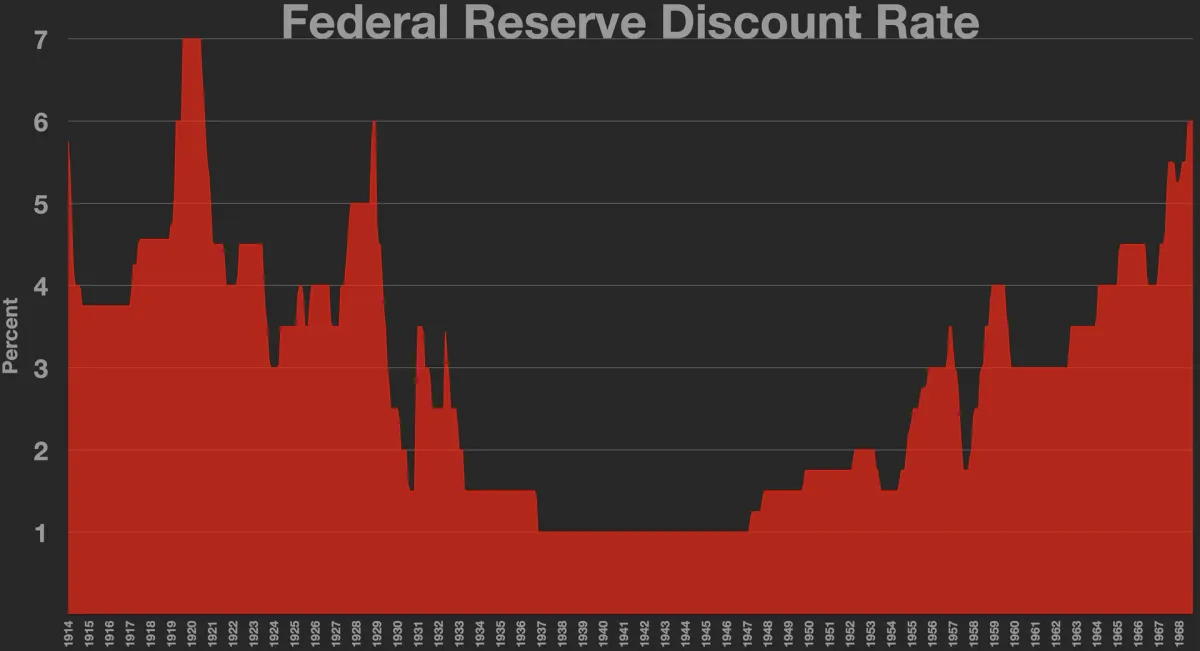
Start from the floor. The discount rate used in financial calculations is usually chosen to equal the cost of capital, and it may be adjusted upward to take account of risks in uncertain cash flows, per the discounting entry. The risk-free rate supplies the natural starting point for that build-up. Charges for risk get layered on top of it.
The layering shows up across companies. Discount rates differ by type of firm, and Wikipedia notes that start-ups carry higher rates because of disadvantages against established companies: ownership that is hard to sell, fewer willing investors, and overly optimistic founder forecasts. An established firm with steady cash flows discounts near the floor. A fragile one discounts far above it.
Even the floor is not perfectly safe. Default risk is not the only risk, per the risk-free rate entry. Interest rate risk, currency risk, and inflation risk can all erode a bond's value. A risk-free payout is free of default risk, not of every loss.
Conclusion: Two Rates, Two Jobs
The risk-free rate sets the baseline return money can earn with no default risk. The discount rate converts future cash into present value, built from that baseline plus a charge for risk. One is a floor. The other is a tool.
Keep them separate and most financial comparisons get clearer. A high promised return is the discount rate speaking: it prices danger, it does not remove it. A low safe yield is the floor speaking: it tells you what patience earns when nothing goes wrong.