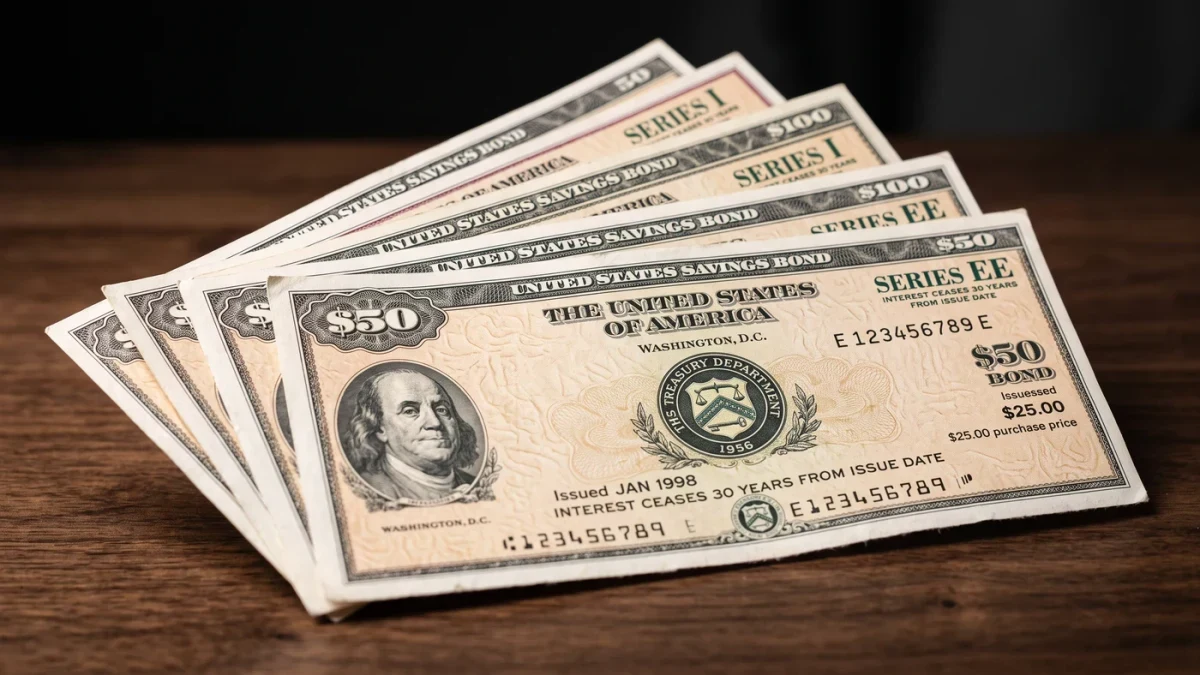
The U.S. Treasury finances the federal deficit through scheduled auctions — bills weekly, notes and bonds monthly and quarterly — in which bidders state the yield or discount they will accept, and the Treasury awards securities starting from the lowest bids until the offering amount is filled. The single yield at which the final amount clears becomes the rate on the entire issue. When a 10-year auction "tails" — clears a few basis points above the level at which the security traded beforehand — desks read it as weak demand; strong auctions stop through the market. In a deficit era with issuance above $10 trillion a year in gross sales, these weekly exercises set the anchors for mortgages, corporate bonds, and car loans.
This explainer covers market plumbing.
Who bids, and how?
Two channels. Competitive bids — stating a yield — come from primary dealers, the two dozen-odd banks and brokers obligated to bid at every auction, plus institutions and, through them, foreign central banks. Noncompetitive bids agree to take whatever yield the auction sets; retail investors using TreasuryDirect use this route. Awards to a single bidder are capped at 35 percent of the issue. The bid-to-cover ratio — total bids divided by the amount sold — is the crudest demand gauge, running near 2.5x on typical coupon auctions over recent years.
What do dealers do with what they win?
Primary dealers warehouse the new securities and distribute them onward, which is why they hedge: selling Treasuries futures or shorting the when-issued security ahead of settlement. This hedging mechanically pressures prices around each auction date, and unwinds after. Auction-cycle dynamics of this kind are the background noise behind headlines that attribute every yield move to macro news.
What is a tail, and why does it matter?
The when-issued market prices the upcoming security before the auction, so the result can be measured against expectation. A stop at or below the when-issued level is a stop-through, signaling demand exceeded the traded expectation; a stop above is a tail. Tails of 1–3 basis points on 10-year and 30-year auctions in 2023 coincided with the era's yield spikes and drew policy attention to who absorbs duration. One weak auction is weather; a run of them is climate.
How do indirect and direct bids map to foreign demand?
Indirect bids — placed through intermediaries, a proxy for foreign official and institutional accounts — have typically taken 60–70 percent of recent coupon auctions. Direct bids, placed with the Treasury itself, include domestic funds and, controversially since the 2020s, hedge funds running basis trades between cash Treasuries and futures. The rise of leveraged basis positioning means measured "demand" partly reflects arbitrage inventory that can unwind fast in stress — a fragility the 2019 repo episode and the March 2020 dash-for-cash both exposed.
Where does the auction calendar come from?
The Treasury's quarterly refunding announcement — released in early February, May, August, and November — sets coupon sizes and maturity mix for the coming quarter, and its language about "regular and predictable" issuance is deliberate: the Treasury does not time markets. Watching the refunding statement plus a run of auction results gives a fair picture of whether the world's deepest market is digesting the supply or choking on it.