Worcester's food markets are shaped by who lives there. The city counted 206,518 residents at the 2020 census, and 22% of its population was born outside the United States, according to Wikipedia's profile of Worcester, Massachusetts. That mix of Vietnamese, Brazilian, Albanian, Puerto Rican, Ghanaian, Dominican and other communities is the reason the city's grocery halls, farm stands and specialty shops look the way they do.
This guide explains what each type of food hub offers, where the incentives sit, and what a shopper gains from each. It is a map of the terrain, not a ranking. Prices and hours change; the structure of the city's market scene does not.
Why does Worcester's market scene look the way it does?
Follow the demographics and the retail follows. Worcester is the second-most populous city in New England after Boston, and it grew by 28% since 1980, reaching its all-time high population at the 2020 census. Growth came partly from new immigration, which the city's own history documents: waves of European arrivals built the industrial city, and newer arrivals from Latin America, Africa and Southeast Asia have reshaped it since the 1990s.
The commercial logic is simple. A grocery that stocks for one community competes on selection; one that stocks for many competes on convenience. Worcester has room for both because its population is large enough and diverse enough to support specialists. Eight colleges and universities, including the College of the Holy Cross, Worcester Polytechnic Institute and Clark University, add a transient student population that buys small and often.
What do the city's grocery halls offer?
Large-format grocery stores in Worcester compete mainly on price and breadth. They carry the standard American pantry, produce sold by volume, and national brands. Their advantage is one-stop shopping and predictable pricing. Their weakness is specialization: a shopper looking for specific ingredients from Ghanaian, Vietnamese or Brazilian cooking will often find thin stock.
Independent and ethnic grocers invert that trade. They compete on selection for a specific cuisine and often on price for those items, because they buy directly from importers their larger competitors skip. What this means for the shopper: the two formats are complements, not substitutes. The weekly staples come from the big store; the specific ingredients come from the specialist.
Where do farm stands and seasonal sellers fit?
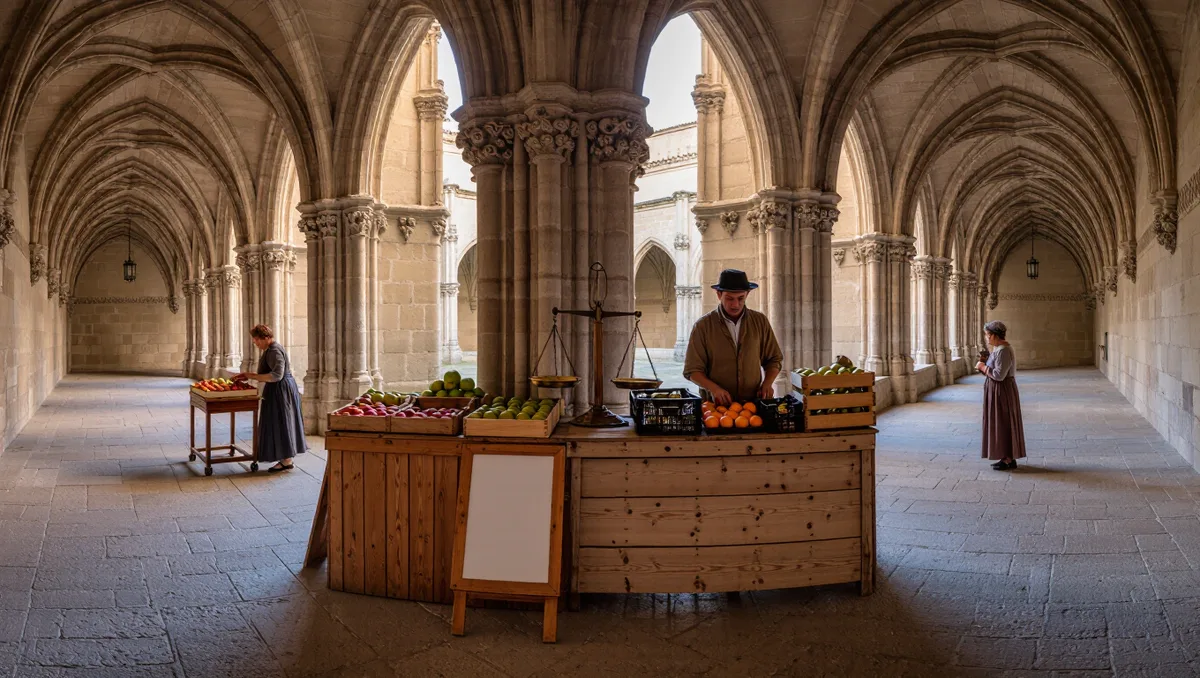
Farm stands and seasonal vendors sell on freshness and origin, not breadth. In a city that sits near the geographic center of Massachusetts, as Worcester does, surrounding agricultural towns are within a short drive, which keeps local produce economically viable. Seasonal sellers typically operate on a narrow window, so their value is concentrated in the growing months and disappears in winter.
The incentive to watch is labeling. "Local" carries a price premium, and the term has no single legal definition at the retail level. A vendor who can name the farm is offering a checkable claim; a sign that says only "local produce" is offering a mood. Ask which farm, which county, and when it was picked. For a broader framework on evaluating stalls, see our guide to Farmers Markets Near Me: How to Find the Best Local Stalls.
How do specialty shops earn their premium?
Specialty shops — bakeries, butchers, cheese sellers, import grocers — sell expertise along with goods. Their prices run higher than grocery halls because their volumes are smaller and their labor per item is higher. The premium is justified when the product is genuinely unavailable elsewhere or the quality difference is real; it is not justified when the same item sits on a grocery shelf for less.
The honest test is substitution. If the specialty item has a close, cheaper substitute, the shop is selling atmosphere. If it does not, the shop is selling access. Worcester's immigrant communities sustain a meaningful number of shops in the second category, because demand for specific regional ingredients is steady and cannot be met by general retailers.
What this means for how you shop the city
Our analysis: treat Worcester's market scene as a layered system and shop it in layers. The structure rewards a two-stop or three-stop routine rather than loyalty to a single vendor.
- Staples first. Buy volume goods at the large grocery halls, where price competition is sharpest.
- Specifics second. Buy cuisine-specific ingredients at independent grocers, where selection is the competitive edge.
- Seasonal third. Buy produce from farm stands during the growing months, when freshness is a real differentiator and not a label.
- Specialty last. Buy from specialty shops only when the item has no substitute, so the premium buys product rather than packaging.
This routine trades a little time for a measurable difference in both cost and quality. It also spreads spending across the formats that actually sustain the city's variety — which, given that 22% of the population is foreign-born, is the variety worth keeping.
The closing ledger: what the evidence establishes
The evidence here is structural, not transactional. Worcester's size, its documented immigrant communities, its college population and its central-Massachusetts location together explain why the city supports grocery halls, independent ethnic grocers, farm stands and specialty shops at the same time. What the sources do not establish is anything about specific vendors, current prices or opening hours — those change too fast for an evergreen guide, and no supplied source documents them.
The older economic lesson still applies. As our Markets of the Past: What Old Trading Halls Still Teach Us About Prices piece argues, market halls have always sorted sellers by what they can do cheaper than anyone else. Worcester's food hubs are a present-day version of that sorting, running on demographics instead of canals. Cui bono? The shopper willing to shop in layers — and the vendors whose specialization the layered routine rewards. For related coverage, see Markets of the Past: What Old Trading Halls Still Teach Us About Prices.